
Period Drama: A Q&A with Olga Kaleta
Published November 5, 2026
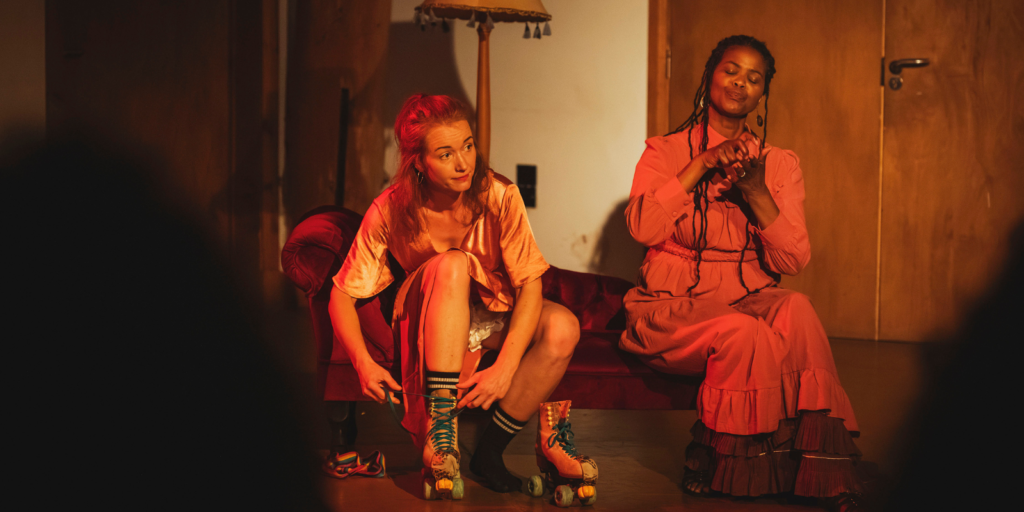
Olga Kaleta's play Period Drama, with integrated British Sign Language (BSL) by Sherrie Eugene-Hart, comes to Exeter Phoenix for one night only on 17th November, as part of our Spooky Season of entertainment. This is the last stop on the company's UK tour.
Period Drama mixes autobiographical storytelling with bold physicality, and has been impressing BSL and non-BSL-users alike with its surreal, dark comedy about mental health, identity and recovery.
Brought to you by award-winning directors Laura Murphy & Nicole A’Court-Stuart, the performance explores personal experiences of chronic anxiety in a world where fear is starting to look like common sense.
Period Drama offers a deep dive into the question of wellness through a feminist lens, via slasher flicks, bloody knickers and the existential dilemmas of insects.
“A final girl on rollerskates? Enough said! We are very excited to host Period Drama as part of our Spooky Season series of events at Exeter Phoenix. This highly innovative and accessible performance smashes together artforms with beautiful intensity and humour, offering the audience a fresh perspective on mental wellness by drawing upon the performer's own lived experience, her unique creative practice and scary movies.”
- Katy Danbury, Exeter Phoenix Performance Programmer.
Katy caught up with Olga, the creator of Period Drama.
Where did the idea for Period Drama come from?
Period Drama grew out of a reflection on my own mental health journey. As I started to reflect on my experiences living with chronic anxiety, I began to notice dimensions that weren’t just personal, but deeply political. That’s where the idea for the show started to take shape.
Period Drama is a response to the growing mental health crisis we have been witnessing for a while now. We often hear that mental health and wellbeing are just about self-care or personal resilience, but that leaves out the bigger picture. This piece pushes back against that narrative. It explores how fear is becoming part of everyday life, and how systems, political, economic, and social, shape our mental health in ways we can’t ignore.
What can audience members expect?
Period Drama blends moments of humour, vulnerability, and discomfort, oscillating between complexity and simplicity. The audience can expect to be both challenged and entertained. They might laugh, they might cry. I hope they’ll do both.
Who will Period Drama appeal to?
Period Drama will appeal to circus, physical theatre, comedy, live art, and horror film enthusiasts, elaborate metaphor lovers and anyone with direct or indirect experiences of mental health challenges. While the show explores mental health through a female perspective, it seeks to bridge the gap in understanding of personal experiences across gender, age and background. It offers a space to reflect on both the commonalities and differences in our lived experiences.
Why did you decide to integrate British Sign Language (BSL) into the fabric of the show?
I wanted to challenge the idea that mental health struggles are purely experienced in isolation and detached from external realities. Although the piece comes from a deeply personal place, I knew I wanted someone else present on stage with me to offer an additional dramaturgical dimension to the internal struggles I’m exploring. In the show, BSL provides access, but it also stands as an equitable language of artistic expression, alongside spoken word, circus, and physical theatre techniques. Sherrie’s presence on stage goes far beyond accessibility. It is poignant, virtuosic, and necessary; fully revealing the expressive power and inherent beauty of British Sign Language.
Tell us a bit about the main themes of the production …
Period Drama is about mental health, identity, and recovery. These ideas are explored through personal reflections on slasher films, the menstrual cycle, and the life cycle of caterpillars. It’s a bit of a metaphysical mash-up, using those images and metaphors to think about what it means to change, to survive, and to grow.
At its heart, the show is about finding peace within perpetual conflict and learning to live with contradictions and ambiguity, both in ourselves and in the world around us. It’s about holding onto hope, even when change feels slow or invisible. And it’s an invitation to see identity as something messy, nuanced, and always evolving.
Is the production based on real experiences?
Yes, it’s rooted in my own experience, but it’s not a literal retelling of specific events. It’s more about how I move through the world as a neurodivergent person with fluctuating mental health, in a society that often values productivity above all else.
While the work is grounded in my personal perspective, the context I’m exploring, and how it shapes my experience, is widely shared. Talking with audience members after the show is by far my favourite part of the project. Hearing how the themes of the show resonate with them personally is always really moving and deeply encouraging.
What inspired you to incorporate the tropes of slasher flicks into the show?
The starting point was my own experience of anxiety, and the opportunity to draw on my obsession with slasher films was an exciting prospect. It sparked an interesting question: why would someone who is, by their own admission, basically scared all the time, actively seek out situations where fear is served up on a platter, like watching a horror film?
Exploring this apparent contradiction led me to discover some fascinating parallels between the tropes of slasher films and the process of trauma recovery. I became particularly interested in the way horror externalises fear, giving something internal and often intangible a physical form.
I came to see the conventions of slasher films as a particularly rich creative framework through which to explore anxiety and trauma.
What's your favourite scary movie?
Friday the 13th, Part 1, of course! Although more recently, I've become completely smitten with Teenage Sex and Death at Camp Miasma. It does reference Friday the 13th and playfully interrogates the conventions of the slasher genre, but that's certainly not the only reason I love it.
The film offers a fresh and original exploration of human desire whilst simultaneously challenging our perceptions of the boundaries between fantasy and reality. It's not strictly a horror film, drawing more on horror aesthetics than the genre itself, but it's absolutely worth watching for Gillian Anderson's brilliant performance alone!
Describe the production in three words.
Absurd. Fun. Honest.
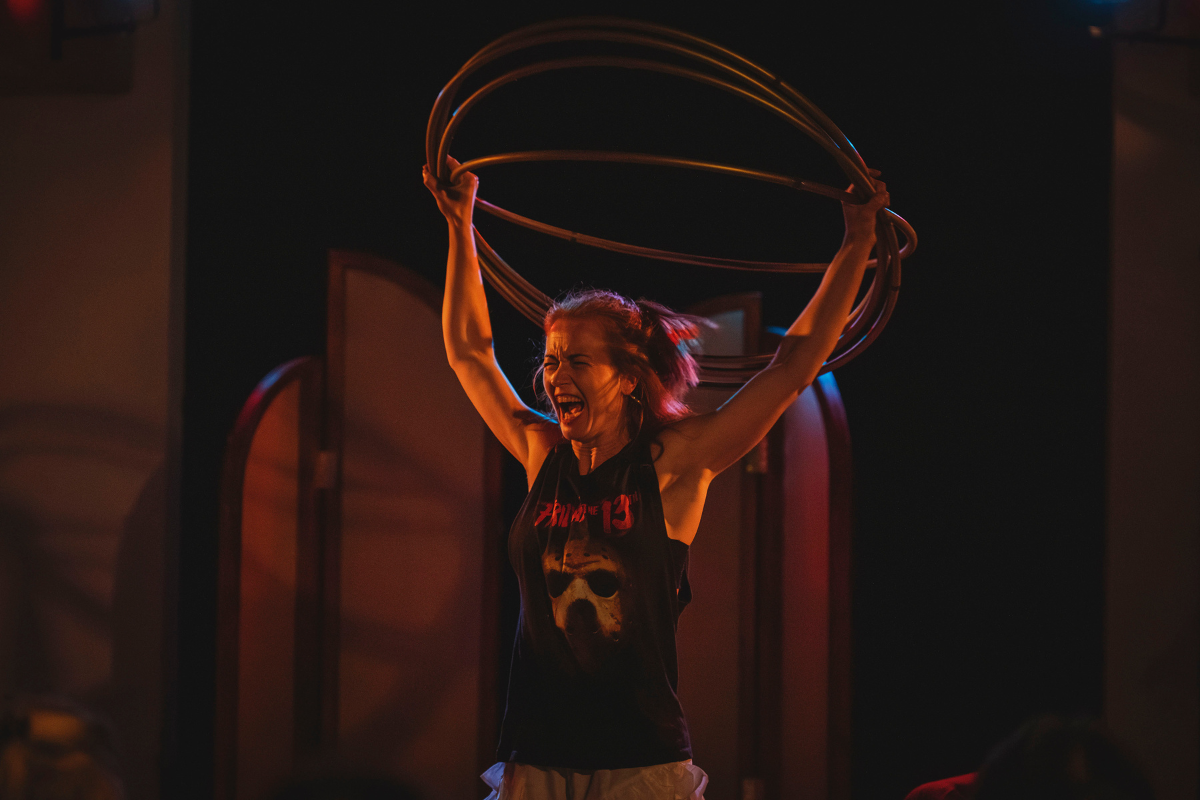
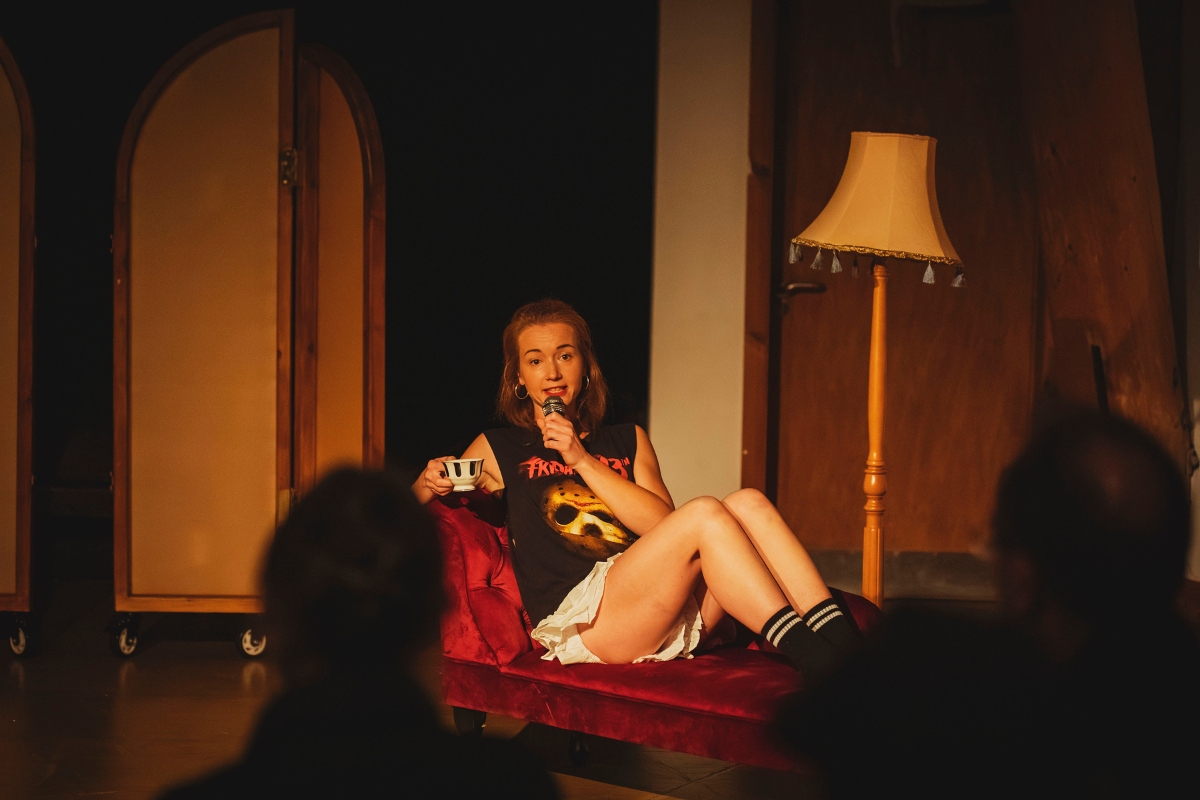
Period Drama is coming to Exeter Phoenix on Tue 17 Nov.
Tickets Pay What You Can: £8 - £16 | Students & Under 25s: £6
Find out more here>>>